Configuring Riverbed NetIM
What Riverbed NetIM is and why configuration matters
Riverbed NetIM proactively discovers and monitors network infrastructure performance and configuration changes. When you add it as a data source A product in your network that forwards data to the system. This data can be streaming data used to detect anomalies and generate incidents, or data that can be fetched on demand when runbooks are executed. in Riverbed IQ Ops, that data flows through Riverbed Edge into the platform and feeds analytics, incidents A collection of one or more related triggers. Relationships that cause triggers to be combined into incidents include application, location, operating system, or a trigger by itself., and runbooks. Before you can add NetIM as a data source, you must configure the NetIM system so it can communicate with Riverbed Edge and:
-
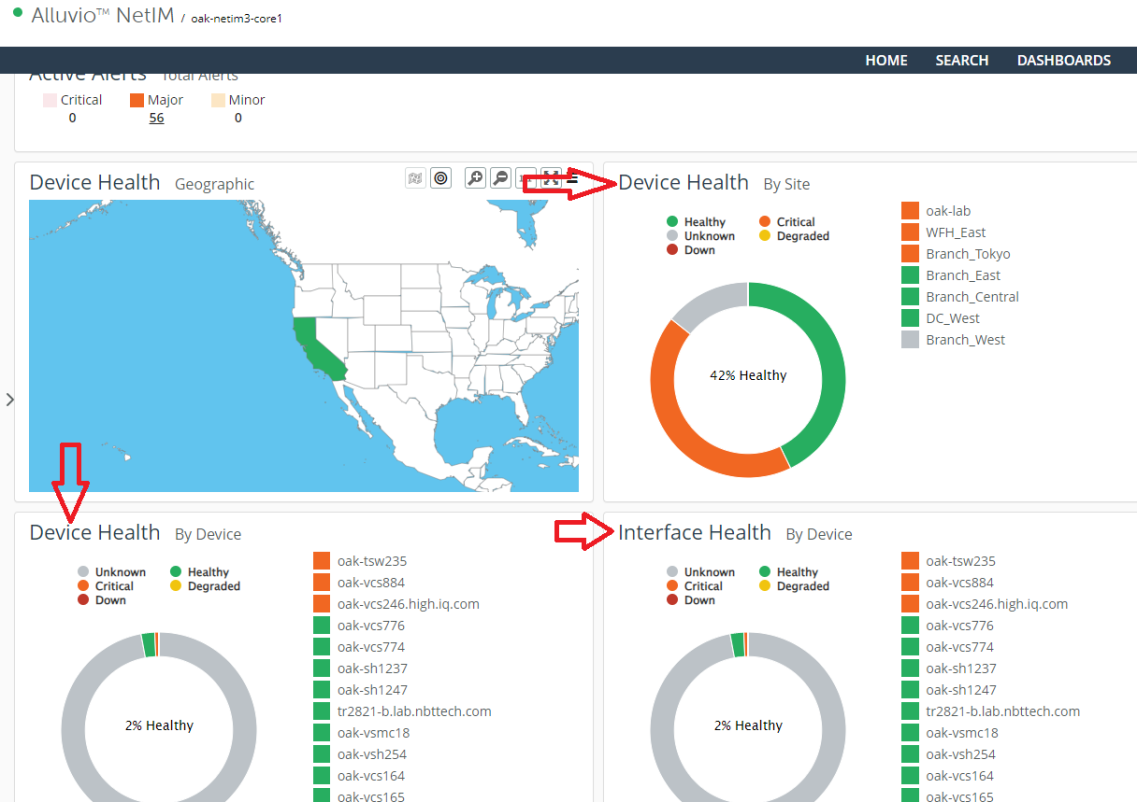
Ensure devices are configured for polling so key widgets have data.
-
Create a dedicated user with the role required for integration.
Without this setup, you cannot connect NetIM in Riverbed IQ Ops, and you will miss device and interface health data for that scope.
What you need before you start
This topic covers only the configuration you do in the NetIM web UI User Interface. The visual components and controls that users interact with to access features and manage the system.. You must also add and configure NetIM as a data source in Riverbed IQ Ops afterward. That procedure is described in Adding a Data Source.
-
Riverbed Edge must be configured and deployed. If you have not done that yet, or need to revisit it, see Configuring Riverbed Edge and Data Sources. You will use the NetIM user credentials when you add NetIM as a data source on the Edge.
-
Access to the NetIM web UI with rights to create users and configure devices for polling.
-
Repeat the steps in this topic for each NetIM system you want to use as a data source.
Configure NetIM for IQ Ops
The Edge connects to NetIM using a dedicated user account. Ensure NetIM is polling devices so that the data Riverbed IQ Ops needs is available, then create a local user with the correct role for your NetIM version. You will use that user when you add NetIM as a data source in Riverbed IQ Ops.
To configure NetIM:
-
Log in to the NetIM UI and confirm that the Device Health By Site, Device Health By Device, and Interface Health widgets are populated. If they are not, go to the Configure menu and configure devices for polling.
-
Create a new local user in NetIM. Assign the role required for Riverbed IQ Ops integration:
-
For NetIM 2.7 and 2.8, the role must be ALLUVIO_IQ.
-
For NetIM 2.9 and later, the role must be IQ_USER.
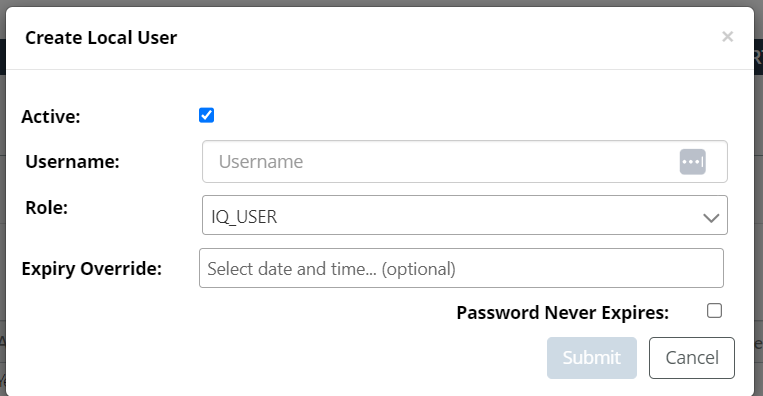 Note: The recommended practice is to select Password never expires.
 -
-
In Riverbed IQ Ops, create and configure each NetIM as a data source on your Riverbed Edge. Use the NetIM user name and password you created in the previous step.