Locations
The Locations An entity type representing physical or logical locations in the customer environment where entities are deployed and monitored. Explorer page displays locations ingested by Riverbed IQ Ops. This page allows you to search all locations known to Riverbed IQ Ops and tag them using custom properties.
Navigate to the Locations explorer page:
-
Click System (the gear icon) at the bottom of the left menu.
-
Open Explorer.
-
Open the Locations view.
Locations Page
The Locations Page shows these columns for each user device:
-
Name: The name of the location.
-
Custom Property: The list of custom properties assigned to the location.
-
Location Mapping: How the location mapping is managed, either unset, system merged, user merged, or user split.
-
Data Source Location Name: The name of the location's data source
A product in your network that forwards data to the system. This data can be streaming data used to detect anomalies and generate incidents, or data that can be fetched on demand when runbooks are executed.. -
Data Source Name: The name of the data sources that reported the location.
-
Data Source Type: The type of data sources reported, for example: AppResponse or NetProfiler.
You can show or hide columns by clicking on the column chooser button. The column chooser button is located in the upper right corner of the table. Clicking on the column chooser will launch the column chooser dialog.
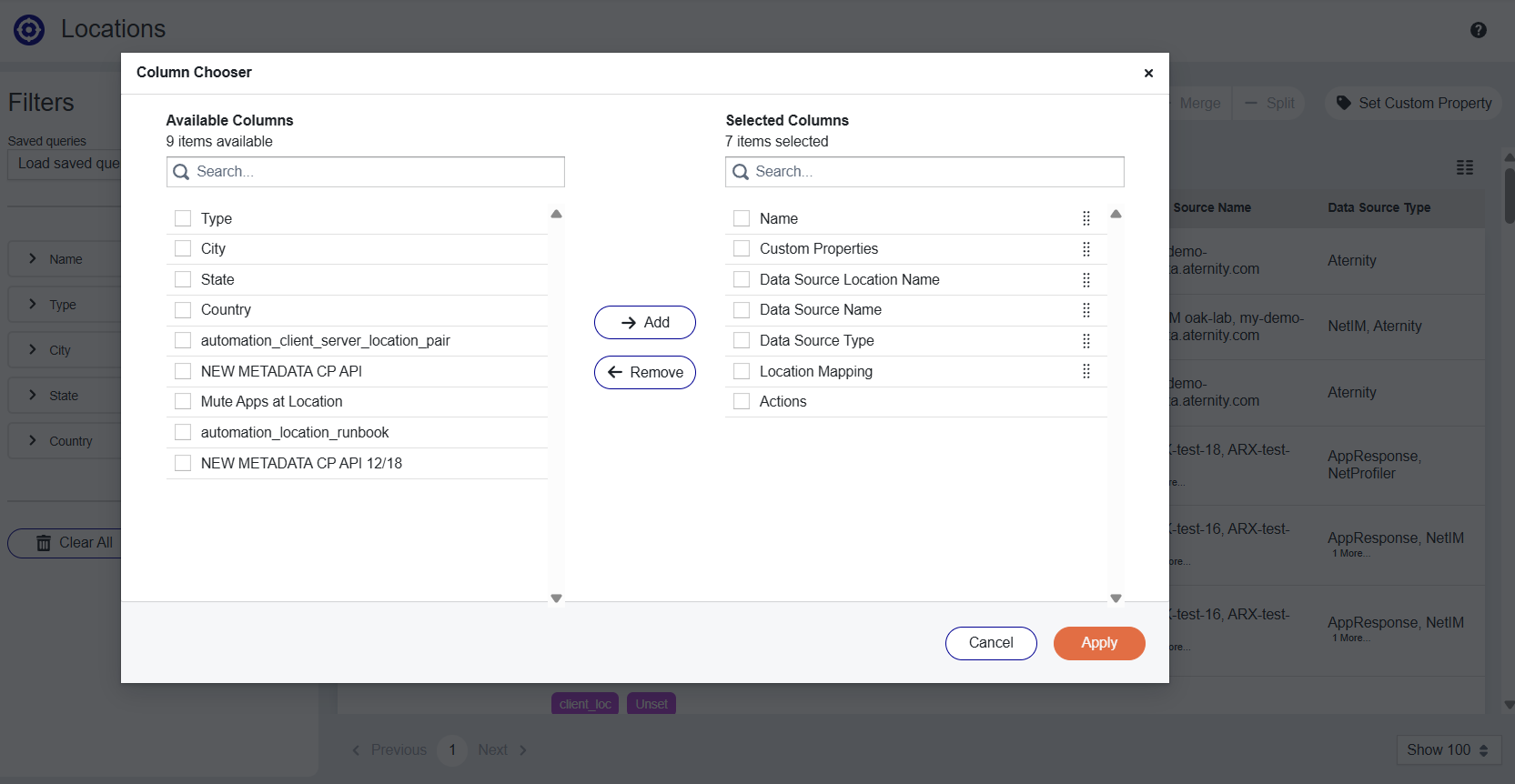
To add columns to the table, select columns in the list of Available Columns and click the Add button. They will move into the list of Selected Columns. To remove columns from the table, select columns in the list of Selected Columns and click the Remove button and they will move back into the list of Available Columns.
Search for locations
Use faceted search to find locations by name and other location properties.
Setting Custom Properties
You can assign Custom Properties to a user device. You can use these custom properties as filters when you search for locations. The
custom properties can be displayed in the runbook An automated workflow that executes a series of steps or tasks in response to a triggered event, such as the detection of anomalous behavior generating an incident, a lifecycle event, or a manually executed runbook. tables. To set a custom property on a user device, click the Set Custom Property button
in the toolbar.
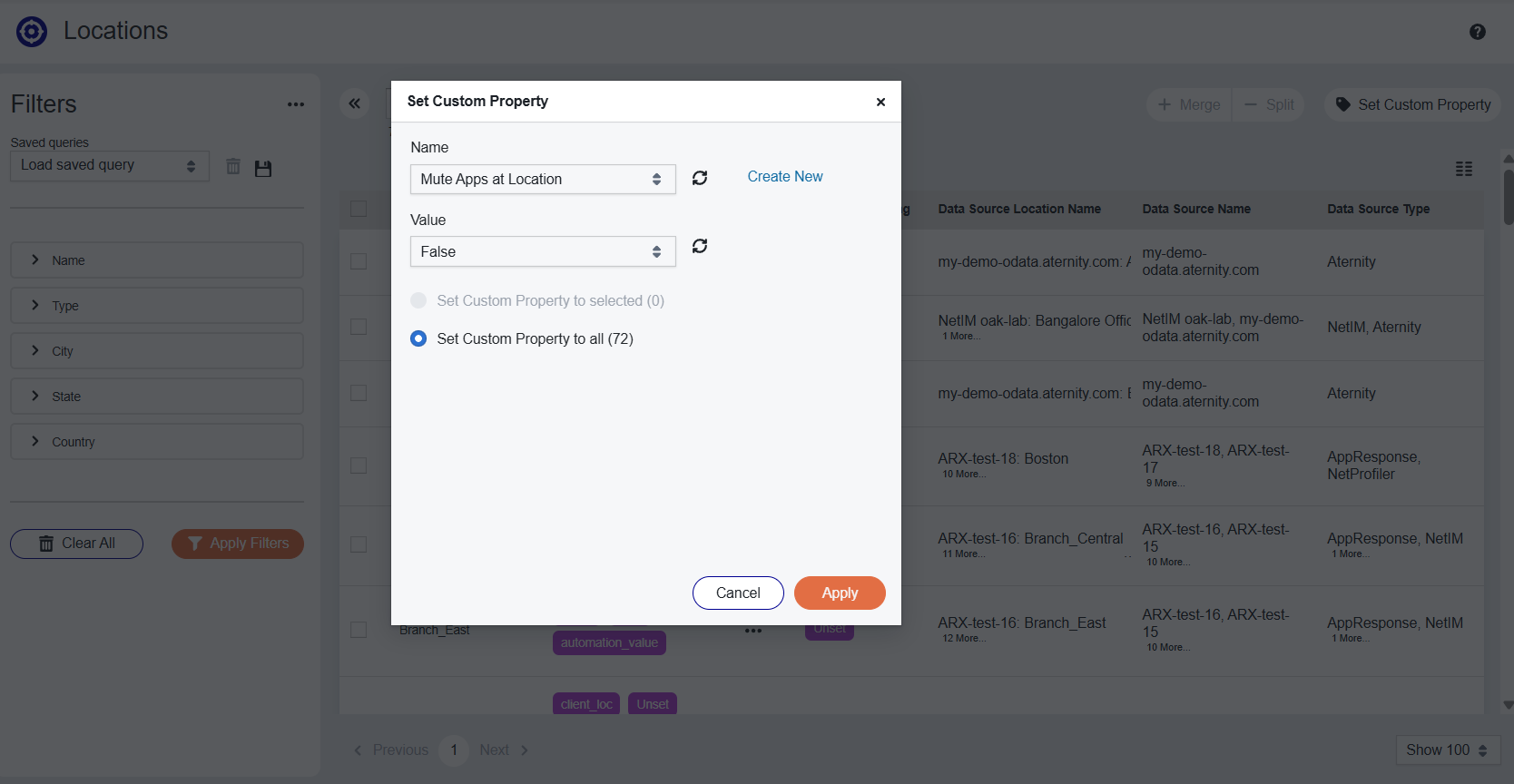
This action launches the Set Custom Property dialog. In the Name dropdown, select the custom property you want to use to tag the locations. In the Value dropdown, select the value of the custom property. You can choose to apply the custom property to only the locations currently selected in the table or you can apply the custom property to all the locations in the current search results using the radio buttons. When you are done, click Apply.